
Mycelium Days
Easy to mistake the visible for the whole.

Gray of winter. Living things are dormant, hibernated, migrated far from this cold. Fog. Rain. Lassitude. Hard to focus on anything for long. Time to double down on resolutions, surely discipline will shepherd us toward practices better for person and planet. Toward fruitfulness.
Dark-bellied clouds cross a cold sky. Where is the golden thread leading through this day, this week, this project? It froze and snapped. Dropped from the loosened grip of distraction. Slipped through fingers slick from fries, chips.
Or there are too many threads to follow. Crossing. Fraying. Tangling, binding.
Consider this poem by Rainer Maria Rilke:1
Evening

The sky puts on the darkening blue coat
held for it by a row of ancient trees;
you watch: and the lands grow distant in your sight,
one journeying to heaven, one that falls;

and leave you, not at home in either one,
not quite so still and dark as the darkened houses,
not calling to eternity with the passion
of what becomes a star each night, and rises,

and leave you (inexpressibly to unravel)
your life, with its immensity and fear,
so that now bounded, now immeasurable,
it is alternately stone in you and star.
I’m tempted to hunker down and meditate on this, let it take root: Stone in me. I’m tempted to rise from the chair and go out into the difficult world, fully present: Star.
Broken thread. Web of threads.
Hibernate. Wander.
We find resonance with Rilke in Gary Snyder: “Our body is a vertebrate mammal being—and our souls are out in the wilderness.”2 Call it duality. Call it paradox. Call it the human condition.
This human has been feeling paralyzed, bound by a tangled thread. Stasis—unsought, unwelcome, an itchy, ill-fitting sweater that doesn’t even keep me warm. I wondered aloud whether during this apparent stasis some subterranean work might be going on, which I could not perceive, and a wise friend didn’t miss a beat: “There’s definitely subterranean work going on.”
Grief. Career in transition. Adapting to a changed body, another year older. Where are the signposts for this journey? There are self-help books—so many I could read till spring sprouts and keep on reading. Glean an insight here, a practice to try there. The reading feels good in the moment (perhaps worthy just for that), but later, can I put a finger on what any of those pages held for me?
Days like today—times like this time—can feel like pouring water on bare ground. Not a waste of good water, but an act of faith in that undetected subterranean work. Watching water soak into dry soil and knowing that it matters. More than matters: is crucial. Nothing will happen aboveground anytime soon. Water, feed anyway.
These are the mycelium days.
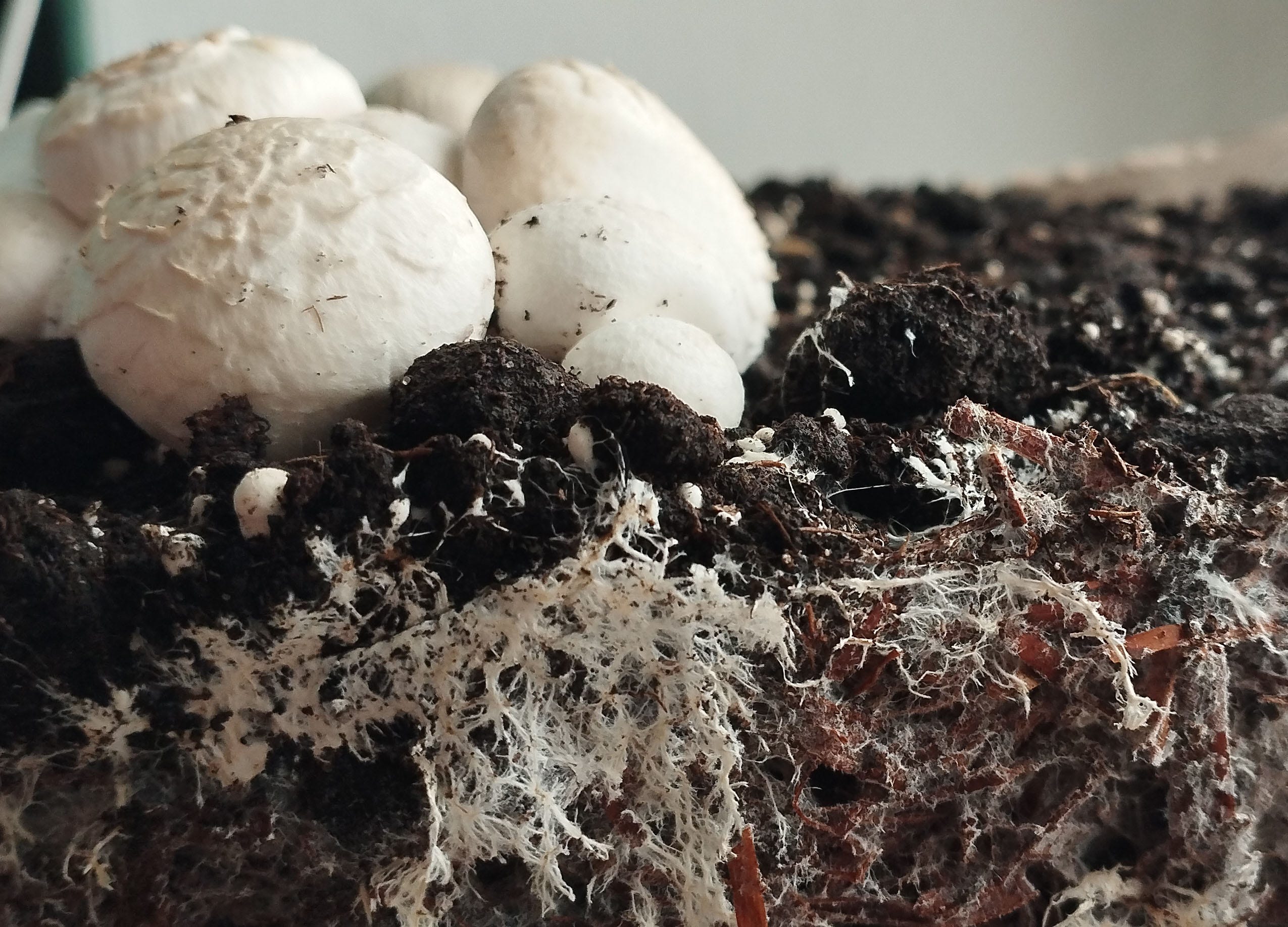
Underground, a fungus sends its slender hyphae outward. Threads of hyphae branch, tangle, form networks, thick-woven mats: mycelia—the white webby stuff you see when you lift a log or other dead thing. Then, in the appointed season the fungus musters its gathered nutrients and thrusts mushrooms up into the open air, literally overnight. Mushrooms are the fruiting body, spore sharer, visible outgrowth of the year’s work. So easy to mistake the visible for the whole.
The mycelium can extend for distances that are hard to believe, for such thin threads. The largest known living organism on Earth is a single fungus in Eastern Oregon’s Malheur National Forest. There, the mycelium of an Armillaria ostoyae extends over three square miles (1,920 acres; 777 hectares). Estimates of its weight exceed that of 200 gray whales—the next largest organism known on Earth. The Humongous Fungus is thought to be between 1,900 and 8,650 years old.
Don’t dis the mycelium.
Honey mushrooms (named for their color, not taste) of Armillaria ostoyae appear in autumn, while all year long the thin fibers of its mycelium, both thread and web, do their subterranean work of turning detritus into life.3
Mycelium is also the fungal half of mycorrhizae—the powerful partnership between mycelium and tree roots. Mycorrhizae have inspired ecological, social, even spiritual insights—not to mention whole books. One of my favorites is from poet Ross Gay,4 who finds both joy and sorrow:
“Because in trying to articulate what, perhaps, joy is, it has occurred to me that among other things—the trees and the mushrooms have shown me this—joy is the mostly invisible, the underground union between us, you and me, which is, among other things, the great fact of our life and the lives of everyone and thing we love going away.… We might call it sorrow, but we might call it a union, one that, once we notice it, once we bring it into the light, might become flower and food. Might be joy.”
Mycorrhizae shall be a topic for another day.
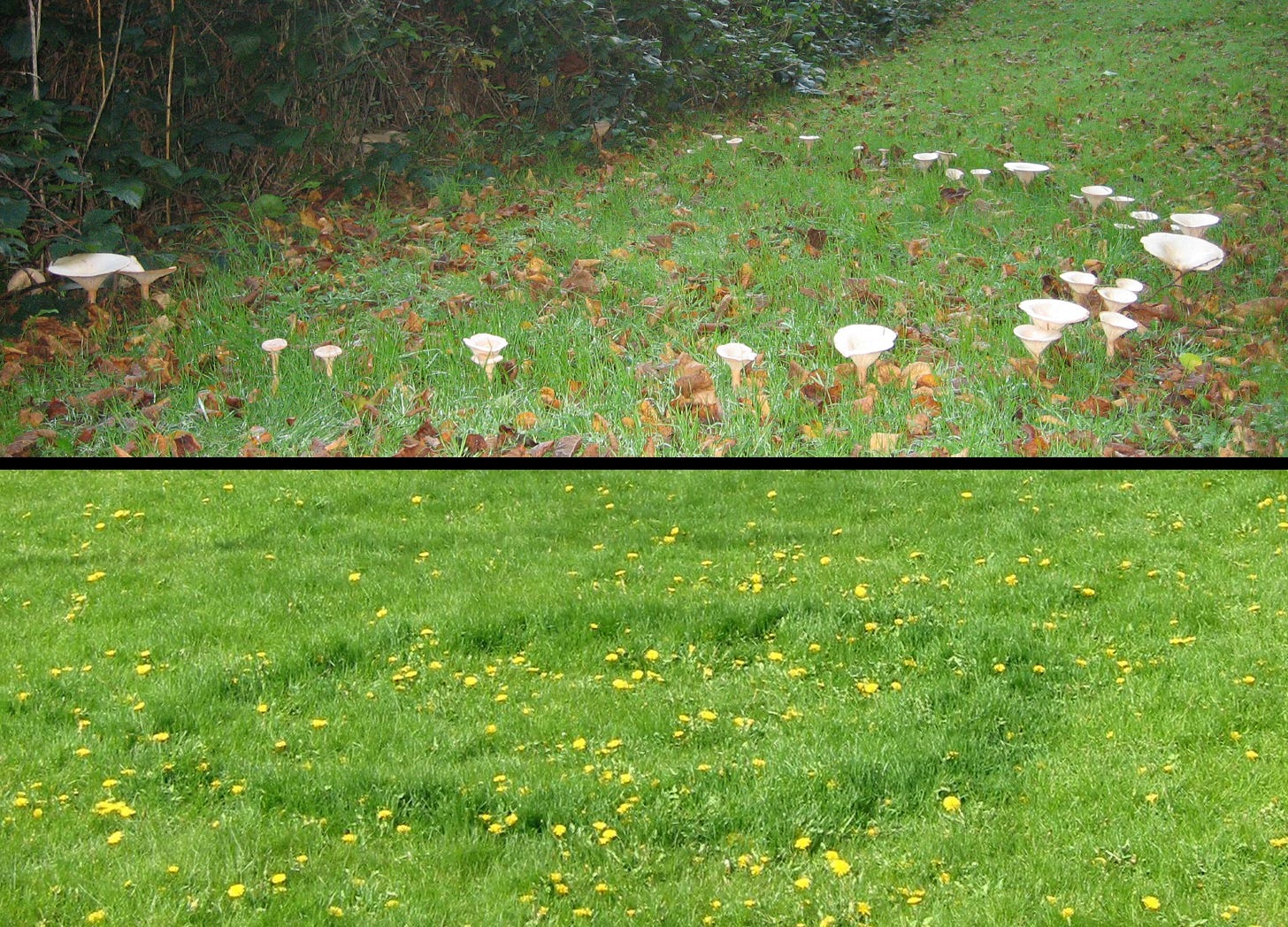


Fun Fact: Fairy rings are the expression of a smaller, more fanciful mycelium that expands in a circle and becomes visible when a ring of mushrooms pops up in a forest or meadow. Or they feed a ring of richer grass. Fruitfulness.
Mycelium days remind me to let go of striving for patience and turn toward acceptance—that there are seasons subterranean and seasons fanciful. Mycelium days are as crucial as sleep.
Sweet dreams!
The Selected Poetry of Rainer Maria Rilke, translated by Stephen Mitchell (Vintage International, 1982), p. 13.
Gary Snyder, The Practice of the Wild (Counterpoint Press, 2020), p. 194.
Armillaria ostoyae is in fact parasitic, eventually killing the trees it infects, but since a dead log hosts more life by weight that a living one, one could argue that it is indeed giving rise to life.
Ross Gay, The Book of Delights (Algonquin Books, 2019), p. 163.
“So easy to mistake the visible for the whole.” Isn’t it just. With life “milestones and markers”, with other people’s art, with movements.