
Saguaro
How long would it take to rewire *actual* saguaro into my brain, replacing the clichéd desert-icon saguaro?

Sentinel. Giant saguaros (Carnegiea gigantea) make us think of sentinels. They stand there, humanoid. They grow there, dendritic. Branches seem as arms. Spines, as hair.
Rain-dweller, I come to the desert around Tuscon, Arizona, as outsider, my nose bloodied by air so dry it crackles between my fingers; to the land of these steadfast, many-branched creatures. In a cactus forest, cactus wrens build nests amid the branches. Though no human may curl up there with a book, that sense of protection persists.
“How I wanted a sentinel of my own—to watch out for us, say, if someone in a windowless van followed us home … These mighty saguaros gave me a kind of confidence I don’t have any more as an adult, confidence that I could stand behind the cactus and not be seen, that my little brown legs could run me around its trunk faster than any man who might approach us, offering candy.”1
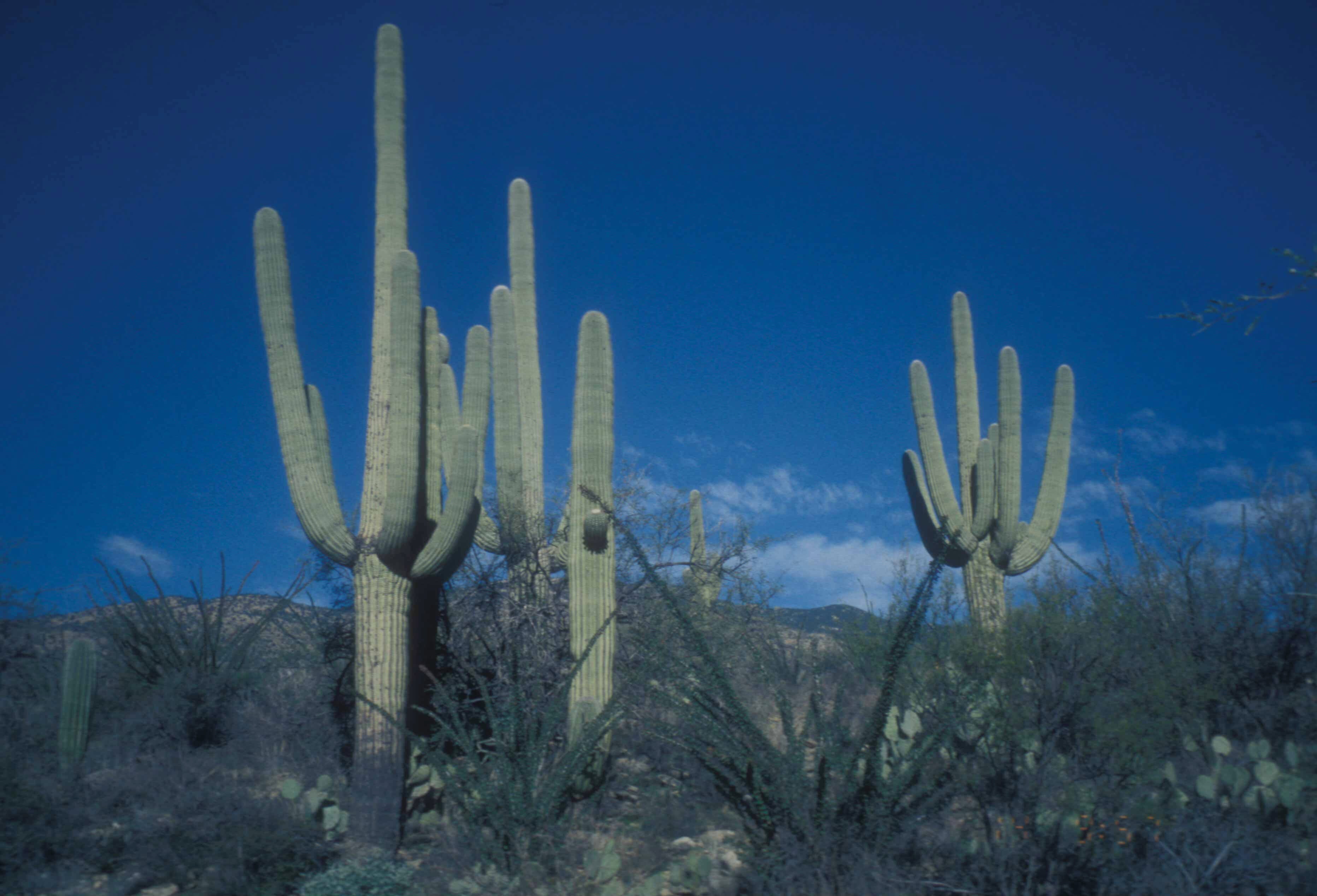
Saguaros may survive 150 years or more. The first flowers bloom at an age we humans begin having mid-life crises. And such a blossoming—a celebratory, invite-all-the-pollinators, creamy white. A saguaro will grow for about 60 years before the first branches bud out. Even longer in areas where there is less rain.
Gila woodpeckers excavate nest cavities in them. Insects drink from them. I’ve even heard of mites that survive in the roasting sun by circling the spines of certain (other) cactus species, to remain in spine-shadow. Arachnid sun dial. Variations on the theme of survival in cactus country fill my ears with their music.
As solitary as a lone saguaro may look, it doesn’t start out that way. A seedling needs the shelter of a nurse tree—mesquite, palo verde—to survive the first years when it rises no more than inches above the soil.
Giant saguaros fruit to beat the odds. Of the millions of seeds spread by fruit-eaters, a single one may germinate and grow. With the right amount of heat and rain—along with protection in that crucial first decade of life—a saguaro may soar, but so slowly a time-lapse camera would seem broken.
When rain comes, the vertical accordion folds flex, expanding as water is absorbed. As it is spent, they contract. In this desert, water is breath.
I inhale, caress, swallow landscape. Crave the local fruit in its season. When I begin this sort of connecting of body and soul with landscape (unwittingly; it’s an instinctive thing), each one responds in its own way—with beckoning or barricade, always making me work for it.
I’m reminded that I cannot write of saguaro, only write into its presence. No need to name myself outsider—my observations and my language unpack the suitcase of damp, temperate air I drag along with me wherever I go.
How many weeks and years would it take to rewire actual saguaro into my brain, replacing the clichéd desert-icon saguaro? I lack the insights developed by growing up with stories, and stories of stories old enough to escape time, that explain all. I make do with field guides and encyclopedias.
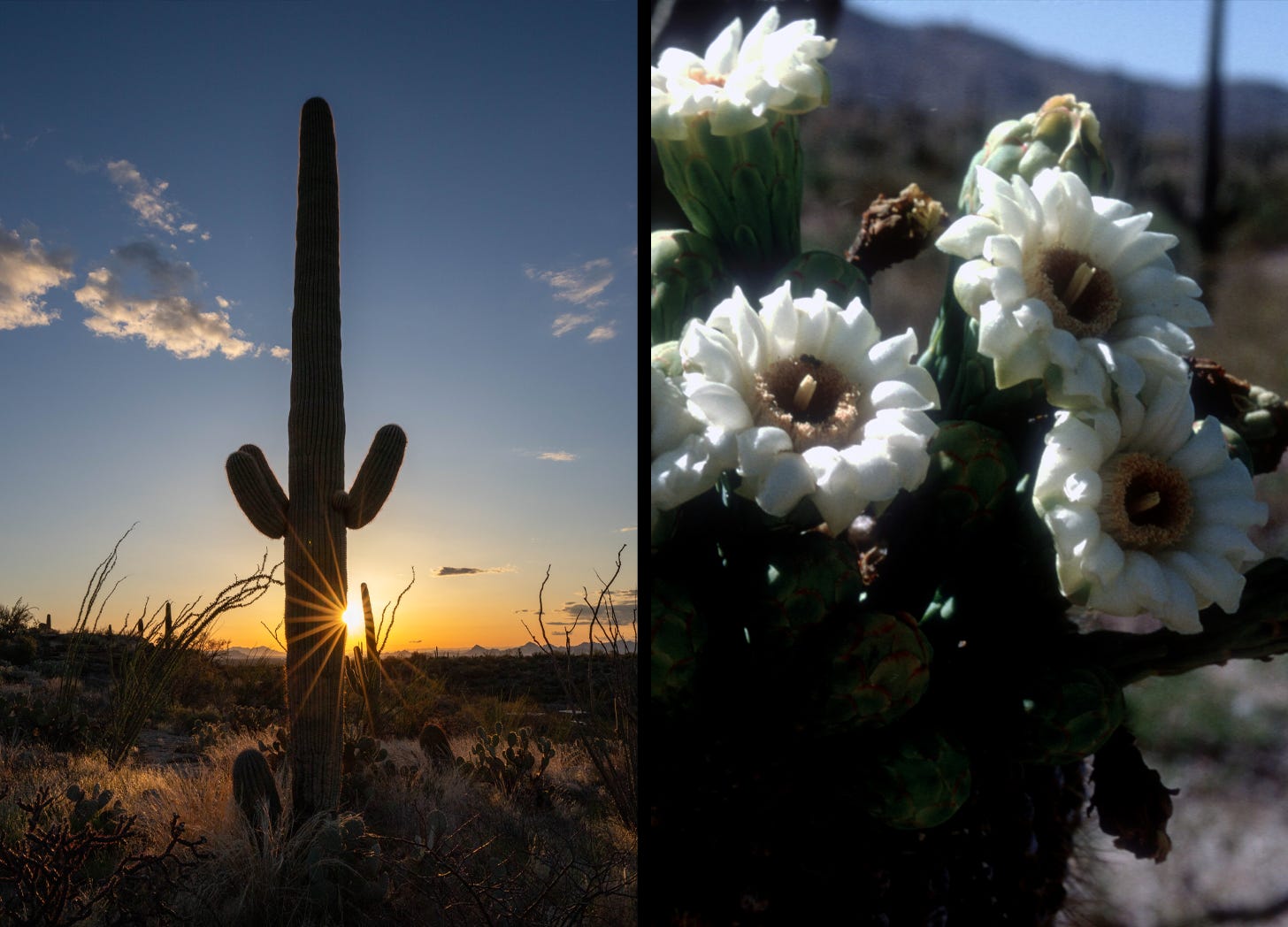
My father died, not unexpectedly, while I was in Tuscon. The bereavement that cocooned me resonated with the saguaros I saw, stark in their late-autumn landscape. Even so, these cacti aren’t missing anything. I know this. They are perfectly adapted to their place, what it gives and what it takes away.
What is your saguaro, your cactus forest?
Aimee Nezhukumatathil, World of Wonders (Milkweed Editions, 2020). p. 28–33.